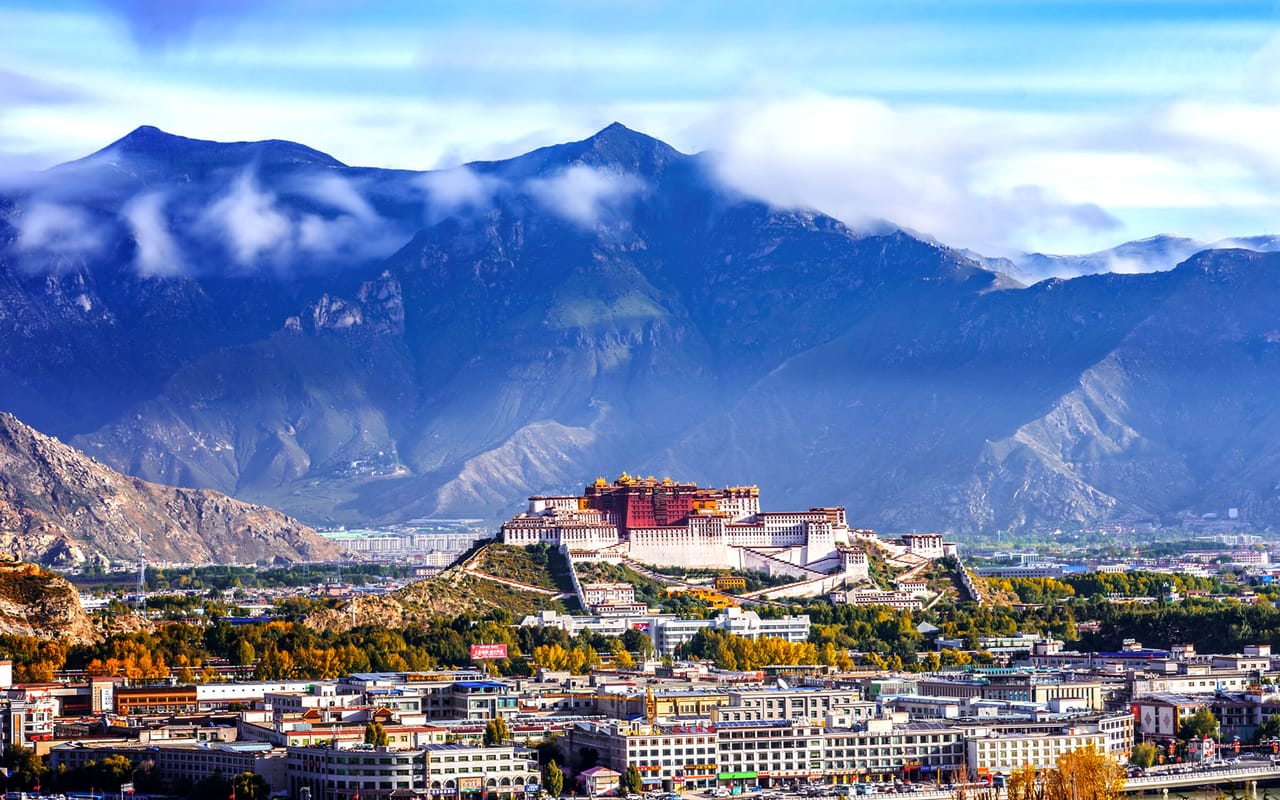
Potala Palace
5A 景区布达拉宫 · Bùdálā Gōng
The towering winter palace of the Dalai Lamas — Tibetan Buddhism's most iconic monument, rising thirteen storeys above Lhasa.
Don't want to go alone? Post on the board and find a travel buddy.
Find a buddyOverview
Crowning Red Hill at about 3,700 m, the Potala is a thirteen-storey palace-fortress of more than a thousand rooms — the White Palace that was the seat of government and the Red Palace of chapels and golden stupa-tombs. A UNESCO site since 1994, it remains the spiritual and visual heart of Lhasa.
History
A first palace rose here in the 7th century under King Songtsen Gampo. The structure you see was begun in 1645 by the fifth Dalai Lama, becoming the winter residence of the Dalai Lamas and the seat of the Tibetan government until 1959. Each later Dalai Lama added chapels and a jewelled stupa-tomb.
Culture & religion
Buddhism reached China along the Silk Road about 2,000 years ago and became deeply Chinese. It teaches release from life’s suffering through compassion, mindfulness and meditation — and inspired most of China’s great temples, grottoes and pagodas.
The Potala fuses palace, fortress and monastery into one — the embodiment of Tibet's former union of religious and political authority under Tibetan (Vajrayana) Buddhism. Its chapels, murals and the gold-and-jewel stupa-tombs of past Dalai Lamas make it a supreme pilgrimage site; devotees still walk the kora circuit around its base.
What to see
The Red Palace & golden stupas
The religious core — chapels and the dazzling jewelled, gold stupa-tombs of past Dalai Lamas.
The White Palace
The former seat of government and the Dalai Lama's living quarters.
Rooftop views over Lhasa
From the upper terraces, the whole holy city and the mountains beyond unfold.
The pilgrim kora
Join the devout walking and spinning prayer wheels on the circuit around Red Hill.
Visiting
Visits are tightly controlled: foreigners need a Tibet Travel Permit and must come with an organised tour/guide. Entry is by timed slot, time inside is limited (~1 hour), and you're at high altitude — acclimatise in Lhasa for a day or two first. Book well ahead.
- Tickets
- Around ¥200 in peak season plus permit and tour costs (approximate). The Tibet Travel Permit must be arranged in advance through a registered agency.
- Opening hours
- Timed entry roughly 09:00–16:00; daily visitor numbers are capped. Seasonal variation applies.
- Suggested route
- East entrance → climb to the White Palace → the Red Palace chapels and stupa-tombs → rooftop viewpoints → descend. Optionally walk the pilgrim kora around the base. ~1.5–2 hours.
Suggested routes
1. Guided palace visit
About 1.5–2 hoursmany stairsWhite Palace → Red Palace chapels and golden stupas → rooftop. On your assigned timed slot, with a guide.
2. Palace + pilgrim kora
About half a day~3 kmAdd the kora circuit around Red Hill among the pilgrims, plus the square for the classic photo.
Points of interest
- 1
East entrance · 东门
Ticketed timed entry.
- 2
White Palace · 白宫
Former seat of government.
- 3
Red Palace · 红宫
Chapels & golden stupa-tombs.
- 4
Rooftop viewpoint · 金顶
Views over Lhasa.
- 5
Pilgrim kora · 转经道
Circuit around Red Hill.
Getting there
In Lhasa, reached via Lhasa Gonggar Airport or the Qinghai–Tibet railway. A taxi reaches the palace in the city; you must enter on your assigned tour slot.