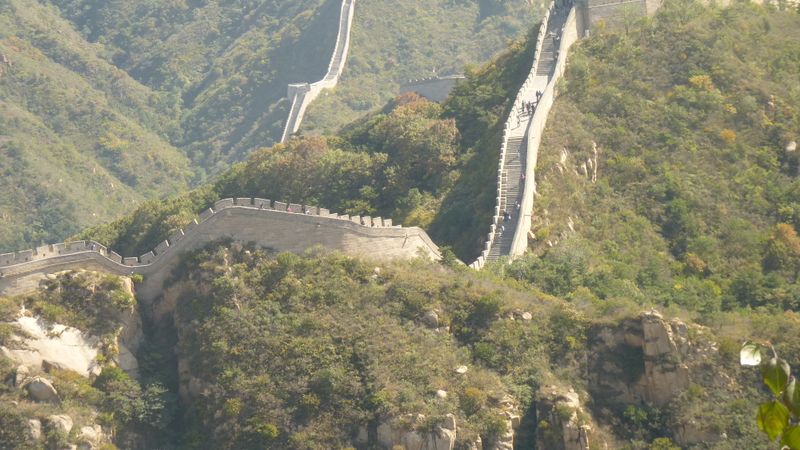
Great Wall (Badaling)
八达岭长城 · Bādálǐng Chángchéng
The most famous and accessible section of the Great Wall, about 70 km northwest of Beijing — grand, well-restored, and reachable by direct train.
Don't want to go alone? Post on the board and find a travel buddy.
Find a buddyOverview
Badaling is the Great Wall most visitors picture: a broad, well-restored Ming rampart striding along the ridges of the Jundu Mountains, with sturdy watchtowers and sweeping views. As the first section opened to tourism and the easiest to reach from Beijing, it is also the busiest — but its scale, cable cars and direct rail link make it the simplest introduction to the Wall.
History
The Great Wall is many walls built over 2,000-plus years; the brick-and-stone rampart at Badaling is Ming-dynasty work, largely from the late 1500s. Guarding the mountain pass on the road to the capital, Badaling was a strategic strongpoint — its name suggests "giving access in all directions". It became the first stretch restored and opened to the public in the 1950s and has hosted countless state visitors since.
Culture & religion
Badaling is where the Wall became a national symbol for the modern era — the section leaders bring foreign guests to, and where the saying "不到长城非好汉" (you're not a true hero until you've climbed the Wall), attributed to a Mao poem, is felt most keenly. Like the rest of the Wall it marked the long frontier between farming China and the northern steppe, but here that history is wrapped in a very public, celebratory role.
What to see
North viewing platforms
The classic climb up to towers 7–8 (北八楼), the high point with the widest panorama.
Cable car & pulley car
Lifts on both the north and south sides save the steepest climbing.
Direct S2 / high-speed train
The rare Great Wall section you can reach by rail from Beijing, no car needed.
Ming ramparts & watchtowers
Wide, well-preserved battlements built for troops and signal fires.
Visiting
Go early on a weekday — Badaling is popular and midday is crowded. The north section is steeper and more scenic; the south is gentler. Wear good shoes for the steep, uneven steps, and bring water. Allow 3–4 hours including travel.
- Tickets
- Entrance around ¥40 (about ¥35 in low season); the cable car and pulley car are separate fees (approximate — confirm on the official site). Timed-entry booking may be required in peak periods.
- Opening hours
- Roughly 06:30–16:00 or later depending on season, with last entry ahead of closing; lifts stop earlier. Hours vary through the year and in bad weather.
- Suggested route
- From the train/bus arrival → walk to the ticketed entrance → climb the north section toward the higher towers (or take the cable car) → return the same way. A half-day trip from central Beijing all-in.
Suggested routes
1. North section climb (classic)
About 3 hours~3.5 kmUp toward the north towers for the big views, on foot or with the cable car for part of it. Steep in places.
2. Train day trip
Most of a dayvariesTake the S2 or high-speed train from Beijing, walk the wall, and train back — no driver or tour needed.
Points of interest
- 1
Main entrance / ticket office · 售票处
Buy tickets; booking may be required in peak season.
- 2
North cable car station · 北线缆车站
Cable car up the north side.
- 3
North Tower 8 (北八楼) · 北八楼
The high point and best panorama.
- 4
Badaling railway station · 八达岭站
High-speed / S2 train arrival.
Getting there
About 70 km northwest of Beijing and, unusually, rail-served: the S2 suburban train or a Beijing–Zhangjiakou high-speed train reaches Badaling in under an hour to ~1.5 h. Bus 877 runs from Deshengmen; day tours and hired cars are the easiest door-to-door option.